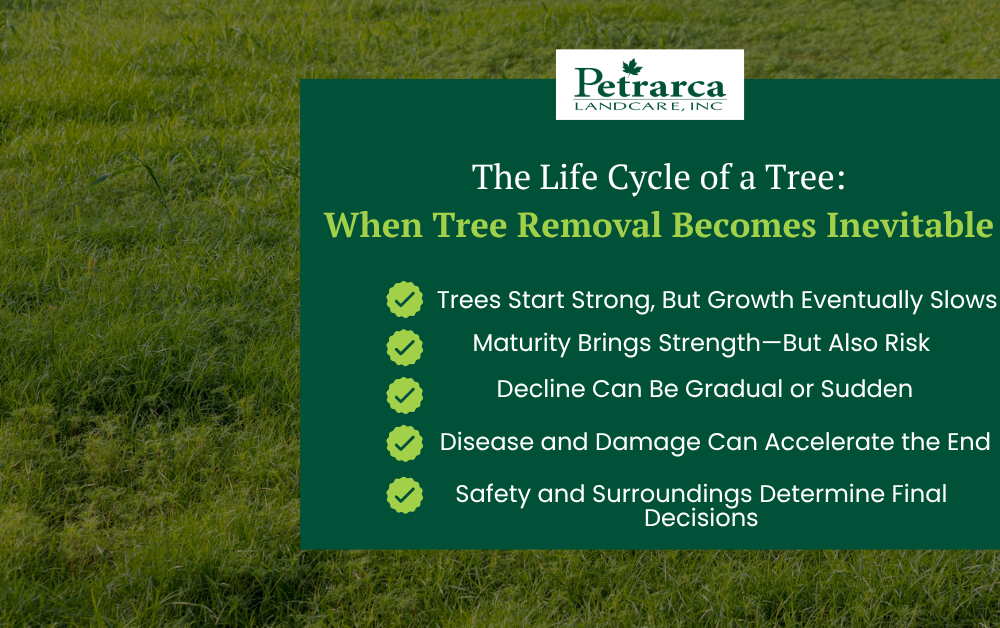
Trees are a valuable part of any landscape, offering shade, beauty, and environmental benefits throughout their lives. However, like all living things, trees mature over time, eventually reaching a point where they start to decline. Understanding these stages can help property owners make informed decisions about care, maintenance, and when tree removal becomes necessary. Although it may be difficult to come to terms with removing a tree, recognizing the signs early helps prevent safety risks and costly damage. With expert insight from Petrarca, homeowners can better navigate these decisions with confidence. Knowing when to act ensures your property remains both safe and visually appealing.
Trees Start Strong, But Growth Eventually Slows
In the early stages, trees grow rapidly and establish strong roots and structure. Over time, growth naturally slows as the tree matures, which is a normal and expected part of its life cycle. During this phase, trees shift their energy from rapid expansion to maintaining their existing structure and health. While they may still appear healthy, they can become more sensitive to environmental changes and stress. This stage is often overlooked because the tree still looks stable from the outside. However, subtle changes can signal increased vulnerability.
Early Growth and Root Development
Young trees focus heavily on building a deep and supportive root system that anchors them securely in the ground. This rapid growth phase allows them to absorb nutrients efficiently and develop a strong trunk and branches. As roots spread, they create a stable foundation that supports long-term health and resilience. During this stage, trees are generally more adaptable to environmental conditions. Proper care early on plays a major role in how well a tree matures.
Transition Into Maturity
As trees age, their growth rate slows, and they begin to reach their full size and shape. This transition marks a shift in how the tree uses energy, focusing more on maintenance than expansion. While this is a natural progression, it can make trees less resilient to stressors like drought or poor soil conditions. The tree may also become more susceptible to pests or minor diseases. These changes can be gradual and easy to miss without regular observation.
Signs of Slowing Growth
- Smaller or fewer leaves than usual
- Reduced annual growth in branches
- Increased sensitivity to weather changes
What it means: Slower growth is normal, but it can also make trees more vulnerable to stress, disease, and environmental changes.
Maturity Brings Strength—But Also Risk
A mature tree is often the centerpiece of a landscape, providing shade, curb appeal, and environmental value. However, with size and age come new challenges that can increase the need for tree removal if not properly managed. Large limbs, dense canopies, and increased weight can all place stress on the tree’s structure. While the tree may appear strong, hidden weaknesses can develop over time. Without regular maintenance, these issues can become safety hazards. This stage requires careful monitoring to balance beauty with safety.
Structural Changes Over Time
As trees grow larger, their branches become heavier and their overall structure more complex. This added weight can strain the trunk and root system, especially during storms or high winds. Over time, small structural weaknesses can develop into larger problems. Cracks, splits, or uneven growth patterns may begin to appear. These changes can compromise the tree’s stability if left unaddressed.
Increased Maintenance Needs
Mature trees require more consistent care to remain healthy and safe. Regular pruning helps reduce excess weight and improves airflow throughout the canopy. Without this maintenance, branches can become overcrowded and more prone to breaking. Additionally, dense foliage can trap moisture, increasing the risk of disease. Ongoing care is essential to prolong the life of a mature tree.
Common Risk Factors
- Overgrown or unbalanced branches
- Heavy limbs extending over structures
- Reduced flexibility during storms
What it means: Without proper maintenance, mature trees may become hazardous, especially during storms or high winds.
Decline Can Be Gradual or Sudden
As trees age, they eventually enter a period of decline that can vary in speed and severity. This stage may develop slowly over several years or occur rapidly due to external factors. During decline, the tree’s ability to sustain itself weakens, making it more susceptible to damage and disease. This is often when tree removal becomes a more serious consideration. Recognizing the early signs of decline can help prevent unexpected failures. Acting at the right time is key to maintaining safety.
Gradual Decline Over Time
Some trees slowly lose vitality as they age, showing subtle signs that worsen over time. Leaves may thin out, branches may die back, and overall growth becomes minimal. These changes can be easy to overlook if they happen gradually. However, they indicate that the tree is no longer thriving. Monitoring these patterns helps determine when intervention is needed.
Sudden Decline From External Factors
In other cases, decline can happen quickly due to storms, pests, or environmental stress. A tree that once appeared healthy may show rapid deterioration within a single season. This type of decline often signals significant internal damage. Immediate evaluation is important to assess the level of risk. Quick action can prevent further complications.
Warning Signs to Watch
- Dead or falling branches
- Cracks or splits in the trunk
- Sparse or discolored leaves
What it means: Signs like dead branches, thinning leaves, or cracks in the trunk often indicate the tree is no longer healthy.
Disease and Damage Can Accelerate the End
Even a healthy tree can experience a shortened lifespan when exposed to disease or physical damage. Factors like fungal infections, root disruption, and severe weather can all contribute to rapid decline. In these situations, tree removal may become necessary sooner than expected. Damage can weaken the tree’s structure and reduce its ability to recover. Identifying these issues early helps minimize risk. Proactive care can sometimes slow the process, but not always prevent it.
Common Causes of Damage
Trees experience many external and internal challenges during their lifespan, including pests, construction activity, and extreme weather. Root systems can be damaged by digging or soil compaction, limiting the tree’s access to nutrients. Storms can break branches or split trunks, creating entry points for disease. Over time, these factors compound and weaken the tree. Even minor damage can have long-term effects.
The Role of Disease
Fungal infections and other diseases can spread quickly within a tree, affecting its internal structure. These issues often go unnoticed until visible symptoms appear. By that point, significant damage may have already occurred. Disease can compromise both the strength and stability of the tree. This increases the likelihood of failure.
Indicators of Serious Damage
- Visible decay or fungus growth
- Hollow or brittle wood
- Large sections of dead canopy
What it means: If structural stability is weakened, removing the tree may be the best option to prevent harm or damage.
Safety and Surroundings Determine Final Decisions
The decision to move forward with tree removal isn’t based on health alone. A tree’s location plays a major role in determining whether it poses a risk. Trees near homes, power lines, driveways, or walkways require extra attention. Even a partially healthy tree can become dangerous if it fails in the wrong location. Evaluating both the condition and surroundings ensures the safest outcome. This is often the final step in deciding whether removal is necessary.
Location-Based Risks
Trees positioned close to structures can cause significant damage if they fall or lose large branches. Roots can also interfere with foundations, sidewalks, and underground utilities. These risks increase as the tree ages or declines. Proximity to high-traffic areas adds another layer of concern. Careful assessment helps prevent costly damage.
Balancing Health and Safety
In some cases, a tree may still show signs of life but pose too great a risk to keep. This is especially true if structural weaknesses are present. Removing the tree before it fails can prevent emergencies. It also allows for safer and more controlled removal. Making this decision early is often the best option.
Key Considerations
- Distance from buildings and structures
- Proximity to power lines
- Potential impact if the tree falls
What it means: Even partially healthy trees may need to be removed if they present a safety hazard or interfere with structures.
Conclusion
The life cycle of a tree is a natural process, but understanding each stage helps you make smarter decisions about care and maintenance. From early growth to eventual decline, every phase presents unique challenges that can impact safety and property value. Recognizing when tree removal becomes necessary allows you to act before problems escalate into serious hazards. With guidance from Petrarca, homeowners can confidently evaluate their trees and take the right steps at the right time. Being proactive not only protects your property but also ensures a healthier landscape overall. Making informed decisions today can prevent costly and dangerous situations in the future.
If you’re unsure about the condition of a tree on your property, don’t wait until it becomes a problem. Contact Petrarca today to assess your trees and determine whether tree removal is the safest and most effective solution.